
Belize’s Dr. Carla Barnett – First Female Deputy Secretary-General of CARICOM
The Twenty-Seventh Intersessional Meeting of the CARICOM Heads of Government will be held in Belize 16-17 February, 2016. The opening ceremony will be held on the evening of Monday 15 February, in Placencia, and will be live-streamed via today.caricom.org and www.caricom.org. As we focus on Belize, please see below a feature on the Community’s first female Deputy Secretary-General, a national of Belize, Dr. Carla Barnett.
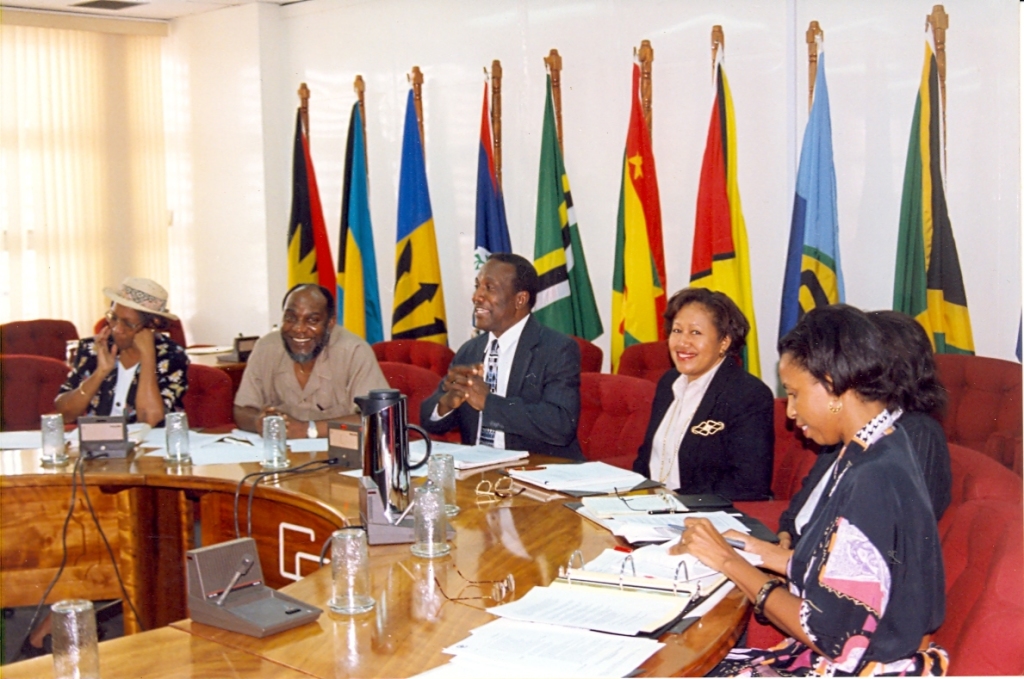
Dr. Carla Barnett, a national of Belize, holds the distinction of being the first female Deputy Secretary-General of CARICOM. She served the Community in that capacity from 1997 to 2002. While acknowledging the milestone that she achieved, she deflected attention to the skills set that she brought to the position.
It was an honour for me to be selected. Being the first female Deputy Secretary-General, while it was a historical milestone, I’d like to think that I came there not because I was a woman, but because I brought a particular set of skills that the Secretariat needed at that time,” she said.
Dr. Barnett was educated at the University of the West Indies, Mona Campus in Jamaica where she read for a Ph.D. in Social Sciences. She also holds a Master of Economics degree from the University of Western Ontario in Canada, and a Bachelor of Science degree in Economics from the University of the West Indies, Mona Campus in Jamaica.
Dr. Barnett has extensive experience at the executive level of the public service in Belize and in the CARICOM Region. Her work experience includes service as Financial Secretary and Deputy Governor/Acting Governor at the Central Bank of Belize. She has also served as a Vice President at the Caribbean Development Bank and is now a Senator in Belize’s Upper House.
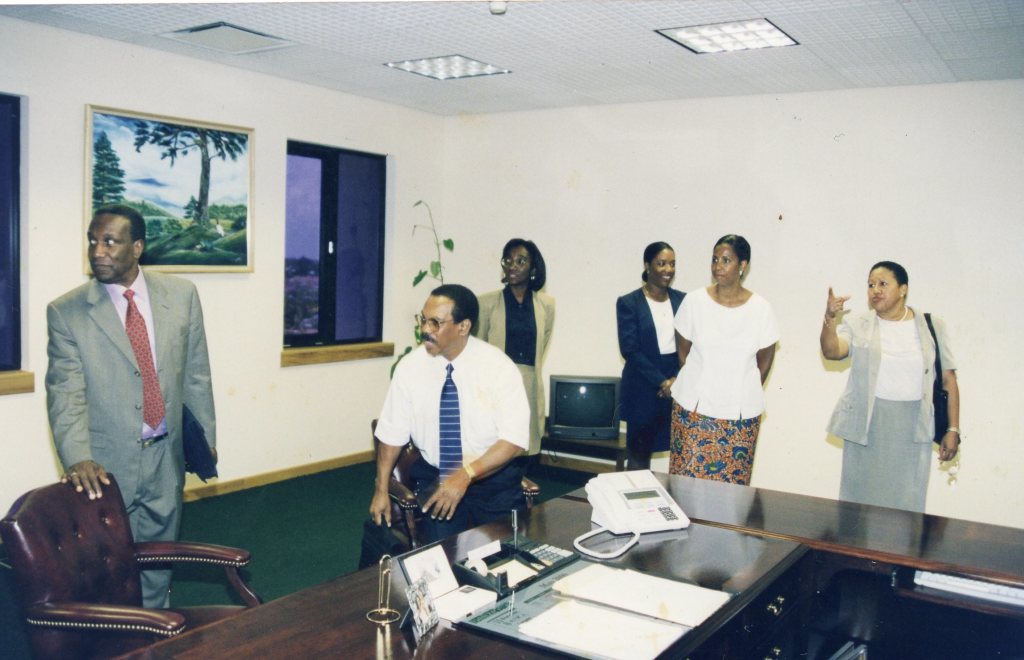
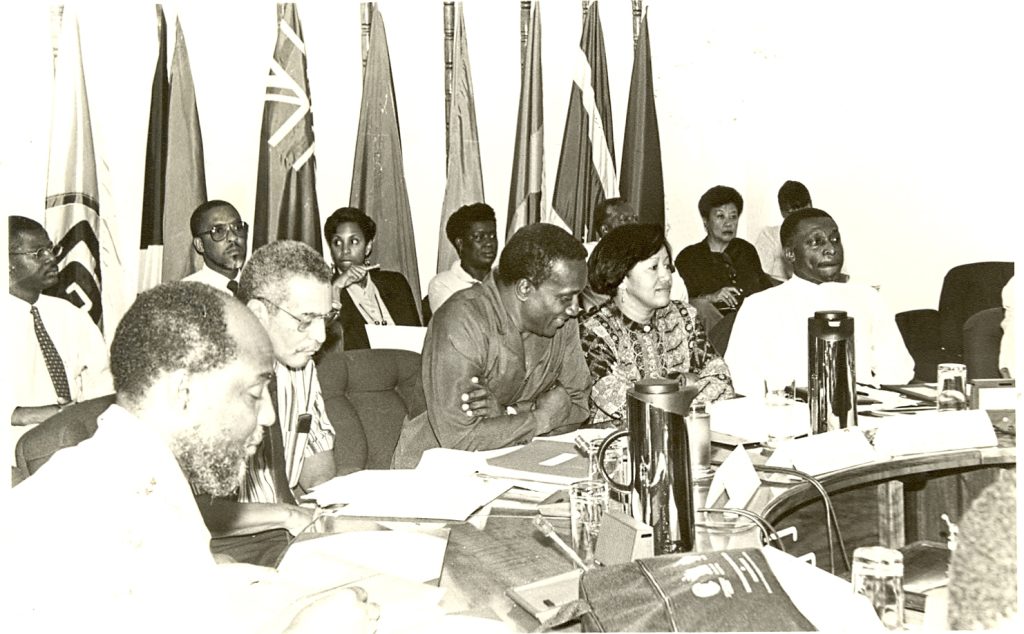
Her tenure as CARICOM Deputy Secretary-General coincided with the re-organisation of the CARICOM Secretariat, the Community’s administrative body.
When she joined the staff of the Secretariat in early 1997, the Community was in the process of completing the negotiation of the Protocols revising the Treaty of Chaguaramas, and was putting in place new Community structures such as the Community Council and the Bureau of Heads of Government. At the time, “the Secretariat itself needed to re-organise the way it did business,” she recalled in a recent interview” and her immediate priority was to modernize certain key internal processes.
One of the first projects that I pushed was the computerisation of the Secretariat. We had few computers, we didn’t have a computer network. We raised money … through CIDA which allocated resources to us and we built the first local area network/wide area network that connected every department in the Secretariat. We got about a hundred computers or more . That project helped the Secretariat communicate internally; we were able to do our work more quickly, efficiently and be more responsive to Member States.
I took that on because in a world in which communication was so critical, and given the fact that our countries were spread across… we couldn’t depend on the old modes of doing things. Integration means we have to talk to one another quicker, be more responsive. So it was really important for us to do that project. I know the Secretariat has built on that… I see the website, good things are happening there. So that’s one of the critical things that my team and I did quite early in my term. And it touched staff personally in the way they did their work,” she recalled.
A lot of time was spent during her tenure on modernising the management of resources. Major emphasis was placed on updating financial rules, procurement systems, processes for developing projects, establishment of internal oversight, and accountability in general. The Secretariat, she recalled wanted to demonstrate that it was using its resources well, and the modernisation ensured that it engaged its donors and potential donors in a more structured way.
I know that that approach to resource mobilisation continues to be developed and that there is a whole new dynamic which continues in terms of accessing and managing resources,” she said.
Dr. Barnett recalled the focus that also was placed on the establishment of the Pan Caribbean Partnership Against AIDS (PANCAP) which she categorised as critical.
We supported that and generated the resources to get that done. That began within the Secretariat with people like Dr. Eddie Greene and the staff in the health portfolio and really grew into something that became globally known as a best practice on HIV and AIDS. That is one of the things that I think we did really well,” she said.
As the Community continues its integration journey, Dr. Barnett lauded the work that has been done so far but acknowledged that there was lot more to be done. In the area of Trade, for example, her vision is for Member States to cease limiting the dialogue to increasing trade with each other, and to expand the focus to utilising the single CARICOM economic space to target increased trade with the rest of the world.
She pointed to the development of human resources and the necessity for Member States to bring into effect measures, such as training and education “equivalencies that need to be sorted out so people can travel and work more freely in the Community”.