
Looking back on the nightmare called Maria
Today, we take a look back at the Category Five hurricane, Maria, that roared through Dominica on the night of 18 September, one year ago.
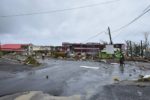
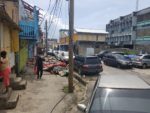
For hours from about 9:00 pm on 18 September, 2017, the winds, ripping through at more than 160 miles per hour, lashed the island of Dominica, taunted and haunted its inhabitants. Bolts of lightning, pounding thunder, unrelenting rain, flooding, rock slides were part of nature’s grim spectacle.

Survivors recalled the sounds of the winds:
“…there was a lot of noise”, cricketer Shane Shillingford remembered. “We just prayed. I just prayed to the Almighty. I know he has the power to control the winds. It definitely increased my faith.”
“The wind was making a sound like it was singing. I had never ever heard that in my life,” Shillingford told the Cricket Monthly.
“We do not know what is happening outside. We do not dare look out. All we are hearing is the sound of galvanize flying. The sound of the fury of the wind. As we pray for its end”, Dominica Prime Minister Roosevelt Skerrit said in Facebook posts during the storm.
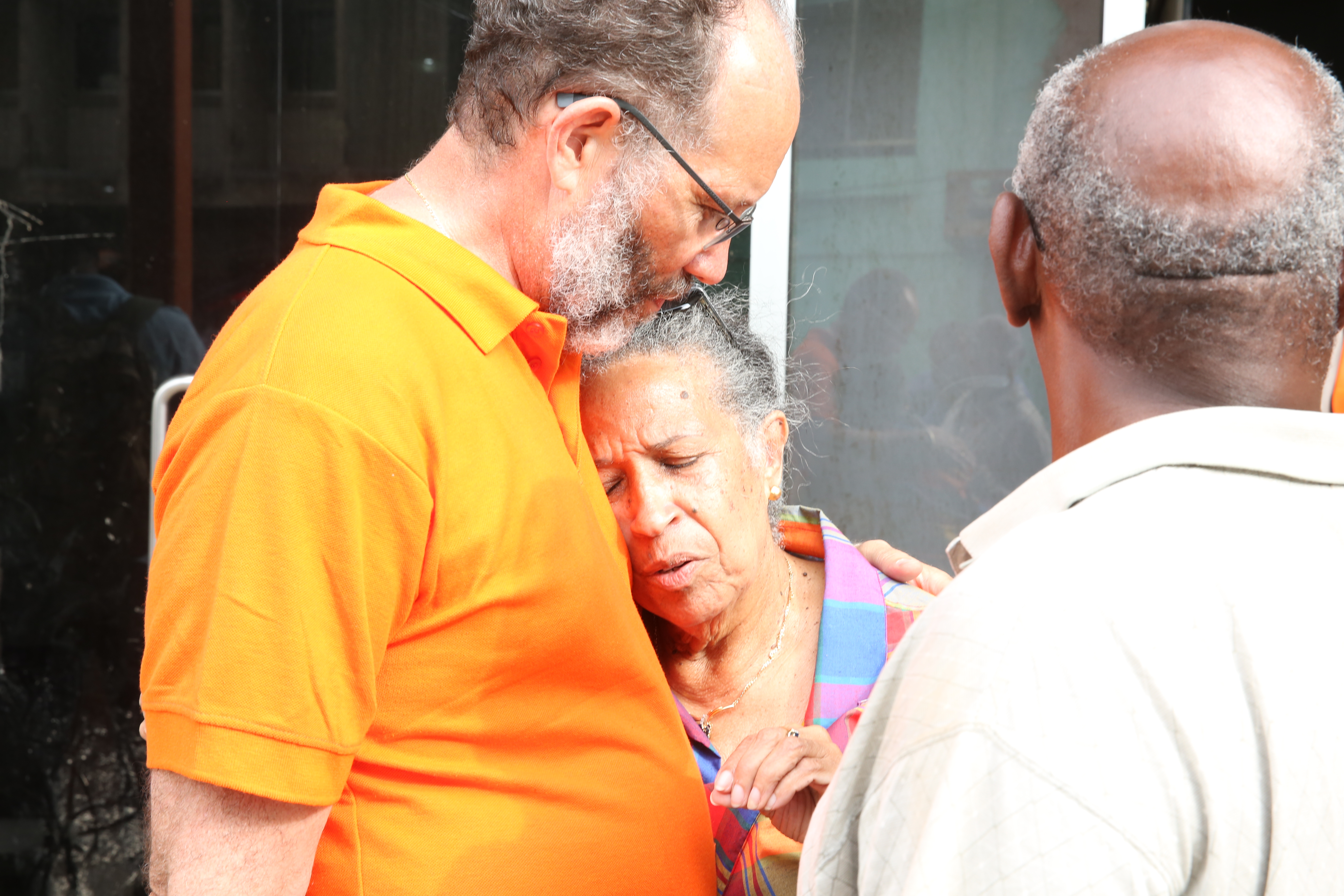
One man recounted to the Caribbean Media Corporation that h was “afraid to mention the word, Maria. It is terrifying.
“In fact, the wind was so strong it was actually communicating, saying something we could not understand. But it was so powerful that it was actually saying ‘get out’, it was hollering and clearly I understood what we went through.”
More than 60 people died or were missing.
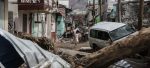
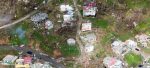
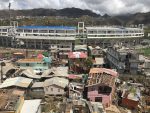
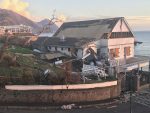
The destruction was unparalleled, and.was estimated to be in the billions of dollars.
“On the evening of 18th September, a merciless Maria passed over Dominica as a Category 5 hurricane, striking us with winds in excess of 175 miles per hour and an intensity, which thank God, is rarely seen by members of the human family,” PM Skerrit recalled while presenting the 2018-2019 budget earlier this year.
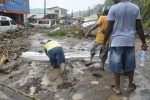
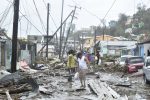
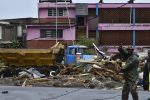
“Much as we wished her to leave, Maria stayed the whole night. In the wake of her departure, she left what a shocked, international media described with terms such as, “the denuding of the landscape”, “the devastation of the infrastructure”, “the disappearance or death of loved ones” and “the despair of those remaining behind, who had lost everything for which they had worked and who were now forced to survive on an island where there was little to eat, no fresh water, and no electrical power, only fear, darkness and an uncertain future,” he added.
“Those of us who survived that terrible night and the weeks immediately following, will forever remember the ferocity of the winds, the raging rivers, the power of the floods, the rolling rocks, the brilliance of the lightning and the pounding of thunder so loud that it shook the very insides of our bodies,” he stated. “We will also never forget the cries of terror of our children, our families, our friends and neighbours. Nor can we erase from our memories, the scenes and appearance of a war zone, when we were able to venture back outside for the first time.”
Maria – the tenth most intense hurricane in the Atlantic ever – destroyed the country’s public infrastructure, crippled its telecommunications and water supply. The tourism sector of the Nature Isle was significantly affected. The agriculture sector was decimated. The prognosis was devastating: “Agriculture in Dominica as we know it,ceases to exist”, Organisation of Eastern Caribbean (OECS) Commissioner, and Grenada Ambassador to CARICOM, Ambassador Patrick Antoine said.
“So for the first time, Dominica, is going to be facing, for the foreseeable future, unfortunately, a level of food insecurity that it hasn’t known before. And that is certainly something that has to be put before us. Our OECS Community and the broader CARICOM family now have to get together with Dominica … to see how we try, very urgently to see how we can rehabilitate agriculture going forward. Let me tell you that the hurricane left nothing untouched. The root crops have been covered by alluvial material – stones and sand – in a way that makes it indistinguishable. All of those things are now gone”, he added.
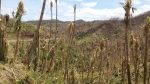

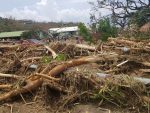
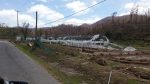
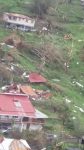
“Dominica is a desert, from green to brown in just eight hours. Transformed from lush greenery to desert brown,” CMC quoted local writer, Jano Jacob, a local writer, as saying. “The rivers vomited wood and mud, left in basins since Erika two years ago. We went through a nuclear hurricane,” he added.
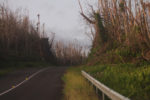
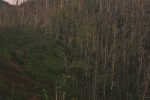
United Nations Secretary-General, Antonio Guterres, who visited the island after the hurricane, and flew by helicopter over some of the most affected areas, said he had “never seen anywhere else in the world a forest completely decimated without one single leaf on any tree.”
“In every community, most of the buildings are destroyed or heavily damaged,” he recounted.
Dominica is firmly on the path to recovery, and is on a mission to become the first climate-resilient country. Days after the hurricane, the CARICOM family, governments, and international development partners quickly mobilised emergency supplies and other assistance to get Dominica back on its feet. Community Institution, the Caribbean Disaster Emergency Management Agency (CDEMA), played an integral role in assessing damage and galvanising action on the ground. In commending CDEMA, CARICOM Secretary-General, Ambassador Irwin LaRocque said the “specialised institution, performed magnificently as it coordinated the relief efforts and helped to set the stage for recovery.”
CARICOM and the United Nations (UN) held a pledging conference at the UN in November 2017 to seek support for the countries that were affected by the Hurricanes which swept through the Region during the hurricane season. Support came from nearly 400 high-level representatives from governments, multilateral and civil society organizations and the private sector. The conference garnered more than US$1.3 billion in pledges and more than $1 billion in loans and debt relief.
“Our devastation is so complete that our recovery has to be total,” Mr. Skerrit said. “And so we have a unique opportunity to be an example to the world, an example of how an entire nation rebounds from disaster and how an entire nation can be climate resilient for the future.
“We did not choose this opportunity. We did not wish it. Having had it thrust upon us, we have chosen actively and decisively to be that example to the world.”